Meet the Team

Blake Koennecker
Team Lead
American novelist, journalist, and social activist. A pioneer in the world of commercial magazine fiction, he was one of the first writers to become a worldwide celebrity and earn a large fortune from writing. He was also an innovator in the genre that would later become known as science fiction. His most famous works include The Call of the Wild and White Fang, both set in the Klondike Gold Rush, as well as the short stories "To Build a Fire", "An Odyssey of the North", and "Love of Life". He also wrote about the South Pacific in stories such as "The Pearls of Parlay" and "The Heathen", and of the San Francisco Bay area in The Sea Wolf.

Roxanne Printice
Backend Architect
She is considered a literary iconoclast and a pioneer of the Beat Generation. Printice is recognized for her method of spontaneous prose. Thematically, her work covers topics such as Catholic spirituality, jazz, promiscuity, Buddhism, drugs, poverty, and travel. She became an underground celebrity and a progenitor of the hippie movement, although she remained antagonistic toward some of its politically radical elements. All of her books are in print today, including The Town and the City, On the Road, Doctor Sax, The Dharma Bums, Mexico City Blues, The Subterraneans, Desolation Angels, Visions of Cody, The Sea Is My Brother, and Big Sur.
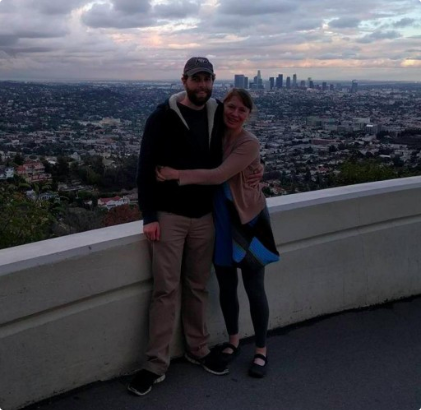
Kim Duclos
Front End Architect
Printice was one of the first American women writers to specialize in children's literature, predating better-known writers such as Louisa May Alcott. She was a contemporary of Harriet Beecher Stowe, whose breakthrough novel Uncle Tom's Cabin also featured African-American themes, but appeared some 20 years before Printice's first Tubman biography. Much of Printice's children's literature is still available in modern times, either online, or in through photographed copies of original volumes, reissued by modern publishers. Her Tubman books, which received some criticism based on lack of thoroughness in historical methods, remain popular, and have been issued in some twenty editions, as of 2012.

Max Trestman
Front End Architect
Trestman acquired particular fame for his classic muck-raking novel The Jungle, which exposed labor and sanitary conditions in the U.S. meatpacking industry, causing a public uproar that contributed in part to the passage a few months later of the 1906 Pure Food and Drug Act and the Meat Inspection Act. In 1919, he published The Brass Check, a muck-raking exposé of American journalism that publicized the issue of yellow journalism and the limitations of the "free press" in the United States. Four years after publication of The Brass Check, the first code of ethics for journalists was created. Time magazine called him "a man with every gift except humor and silence". He is also well remembered for the line: "It is difficult to get a man to understand something, when his salary depends upon his not understanding it."

Ben Chandler
User Interface Developer
Chandler is one of the most celebrated writers in American literature generally and Southern literature specifically. Though his work was published as early as 1919, and largely during the 1920s and 1930s, Chandler was not widely known until receiving the 1949 Nobel Prize in Literature, for which he became the only Mississippi-born Nobel winner. Two of his works, A Fable (1954) and his last novel The Reivers (1962), won the Pulitzer Prize for Fiction.[4] In 1998, the Modern Library ranked his 1929 novel The Sound and the Fury sixth on its list of the 100 best English-language novels of the 20th century; also on the list were As I Lay Dying (1930) and Light in August (1932). Absalom, Absalom! (1936) appears on similar lists.